The 30-Day WinPlay Accuracy Plan: A Science-Based Training Programme
The Science of Skill Acquisition in Precision Tasks
Before the programme, understand the cognitive mechanics you are training.
Perceptual learning is the process by which the brain becomes faster and more accurate at extracting relevant information from complex visual scenes. Studies at the UCLA Learning and Optimization Lab found that structured perceptual training — looking at specific categories of visual problems with immediate feedback — produces measurable accuracy improvements after just 20–25 trials.
This maps directly to WinPlay. Each challenge you complete with feedback (checking the verified coordinate afterward) is one perceptual learning trial. Twenty-five completed challenges with post-game review is enough to produce measurable improvement in most players.
The key word is feedback. Playing without reviewing the result produces almost no improvement. Playing with structured post-game review — comparing your coordinate to the verified position and asking “why was I off in that direction?” — triggers rapid perceptual calibration.
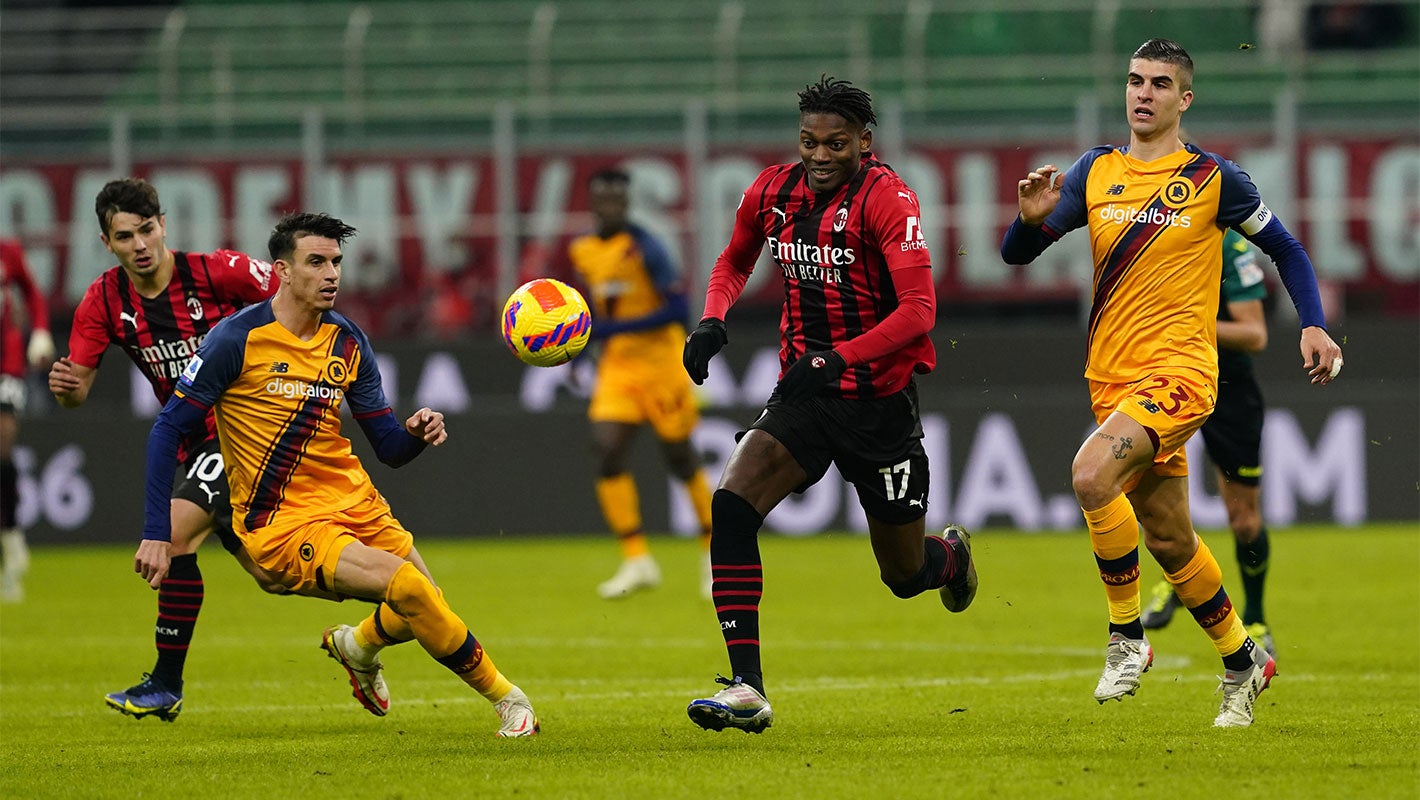
Working memory loading is your second training target. In Spot the Ball analysis, you are simultaneously tracking multiple information streams: player eye-lines, trajectory physics, shadow geometry, body posture signals. This is a working memory task. Like physical muscle, working memory capacity increases with progressive overload — deliberately adding complexity to your analysis over time.
Week 1: Calibration (Days 1–7)
Goal: Establish your baseline and identify your systematic error pattern.
Daily practice:
- Complete the daily WinPlay challenge using your natural, unguided intuition. Do not apply any analysis method. Just place where it feels right.
- After the game closes, check the verified coordinate.
- In a notebook or notes app, record: your coordinate (x, y), the verified coordinate (x, y), your distance, and the direction of your error (was your marker above, below, left, or right of the true position?).
After 7 days, analyse your error log:
- Do your errors cluster in a particular direction? (e.g. consistently placing markers too low, or too far to the left)
- What is your average Euclidean distance?
- Is there a pattern by sport? (e.g. more accurate on cricket than football)
Most players discover they have a systematic bias — a consistent directional error. Common findings:
- Too low: Underestimating ball height in flight (very common — gravity intuition is strong)
- Too far toward the primary action: Anchoring on the most visually prominent player rather than the ball’s actual position
- Too conservative on lofted shots: Not extending far enough along the trajectory arc
Identifying your bias is the foundation of improvement. You now have a specific correction to apply.
Week 2: Single Method Focus (Days 8–14)
Goal: Build depth in one analysis method.
Choose the analysis method that addresses your Week 1 error pattern:
- Consistently too low? → Focus on trajectory physics and launch angle analysis. Study the player’s body geometry to estimate launch angle. Apply Magnus corrections. Deliberately place your marker 15–20 pixels higher than your initial instinct for one full week.
- Anchoring on wrong player? → Focus on eye-line triangulation. Before looking at the most visually prominent player, scan the entire frame and identify all gaze directions. Triangulate from at least three players before placing your marker.
- Missing lofted balls? → Focus on shadow analysis. Spend the first 60 seconds of every challenge looking at the ground in the image before looking at the players.
Daily practice:
- Complete the challenge using only your chosen method for Week 2.
- Record results as in Week 1.
- Compare your Week 2 average distance to your Week 1 average. You should see improvement.
Week 3: Method Integration (Days 15–21)
Goal: Combine two methods and measure the improvement over single-method analysis.
The integration protocol:
Step 1 (60 seconds): Eye-line scan — identify all player gazes and mentally triangulate. Step 2 (60 seconds): Shadow analysis — identify shadow angle, scan for ball shadow on the ground. Step 3 (30 seconds): Trajectory check — does the position suggested by eye-lines and shadows fit the physics of the visible action? Step 4 (30 seconds): Place marker.
Total analysis time: approximately 3–4 minutes per challenge. This is the point at which session depth works in your favour for AdSense revenue generation — you are spending meaningful time on the platform rather than clicking and leaving.
Calibration check: At the end of Week 3, compare your average distance to both Week 1 and Week 2 baselines. Two-method integration typically produces a 20–35% improvement in average Euclidean distance over single-method analysis.
Week 4: Full Protocol + Confidence Calibration (Days 22–30)
Goal: Establish your full analysis workflow and calibrate your confidence to your accuracy.
The full WinPlay analysis protocol:
- Initial 10-second spatial scan — take in the full image peripherally, build spatial map
- Identify contact point — where did the player last touch the ball?
- Eye-line triangulation — scan all visible players, triangulate gaze vectors
- Shadow analysis — find shadow direction, locate ball shadow on ground surface
- Trajectory physics — estimate launch angle, spin type, Magnus correction, flight stage
- Convergence check — do all three methods point to the same zone?
- Place marker at the convergence point
Confidence calibration: Before checking the result, rate your confidence: 1 (low), 2 (medium), 3 (high). After 9 days of this, check whether your confidence ratings predict your accuracy. A well-calibrated player rates themselves as 3 when they actually achieve Expert/Bullseye, and 1 when they achieve Good/Participant. Poor calibration (rating yourself 3 and getting Good accuracy) is a signal you need to deepen your understanding of a specific method.
Tracking Your Progress: Key Metrics
Keep a simple tracking table over 30 days:
| Day | Distance (px) | Tier | Method Used | Error Direction | Confidence |
|---|---|---|---|---|---|
| 1 | 47 | Good | Intuition | Below-left | 2 |
| … | … | … | … | … | … |
Plot your daily distance as a graph. Most players see a noisy but downward trend — some days worse than others, but an improving average. Days where your error is high but consistent in the same direction are telling you something specific about your analysis gaps.
Expected Outcomes
Based on internal WinPlay data and perceptual learning research:
- Week 1 average (intuition only): Typically 35–60 pixel distance, Good–Great tier
- Week 2 average (single method): Typically 20–40 pixel distance, Great–Expert tier
- Week 3 average (two methods): Typically 12–25 pixel distance, Expert tier
- Week 4 average (full protocol): Typically 5–15 pixel distance, Expert–Bullseye tier
These are averages across sports. Cricket images typically improve fastest for players with cricket knowledge. Football set-piece images improve quickly once eye-line triangulation is mastered. Aerial images in any sport improve most from shadow analysis.
The Compound Effect
Here is the motivating reality of this 30-day programme: each skill compounds on the others. Eye-line triangulation becomes automatic, freeing working memory to focus on shadow analysis. Shadow analysis becomes fast, freeing time for deeper physics calculation. The full protocol that takes 4 minutes in Week 3 takes 90 seconds by Day 30 — because the first steps have become intuitive.
This is what distinguishes a trained WinPlay player from an untrained one. Not just accuracy, but the speed of accurate analysis. The leaderboard is won by players who analyse faster and more accurately — and the path to that combination is exactly the structured practice described here.
Start Day 1 of your 30-day programme today. The challenge is waiting on the Competitions page. Record your baseline, check the result, and begin.
Tags: Training Programme · Skill Development · Accuracy Improvement · Perceptual Learning · Sports Science · WinPlay Strategy · 30-Day Challenge