
The Eye-Line Method: How Professional Athletes Reveal the Ball's Location
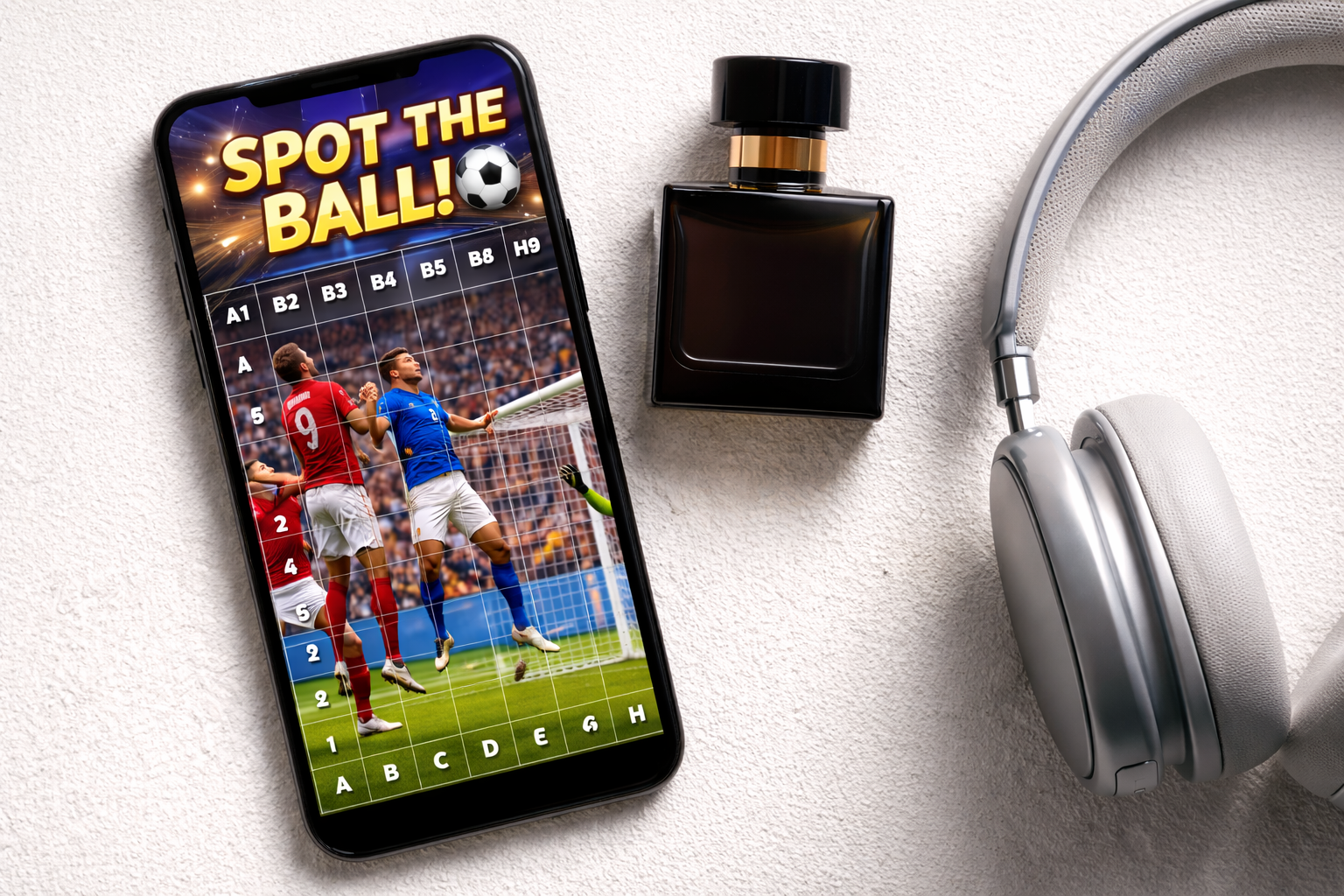
The Neuroscience of Gaze in Sport
Elite athletes do not look at random things. Their visual attention is trained over thousands of hours to fixate on the single most important object in their environment: the ball.
A 2018 study published in the Journal of Sports Sciences used high-speed eye-tracking cameras on professional footballers and found that players fixated on the ball’s position up to 400 milliseconds before it arrived — a phenomenon called predictive gaze. Their eyes were not following the ball reactively. They were predicting where it would be and looking there in advance.
This means the direction a player’s eyes and head are pointing in a sports photograph is not just an approximation of the ball’s location. It is a prediction from a highly trained nervous system. In other words, the player’s gaze is the output of exactly the kind of analysis you are trying to do — their brain has already computed the ball’s position for you.
How to Read Eye-Lines in a Still Image
In a WinPlay photograph, multiple players are almost always visible. Each one provides an independent gaze vector. Here is how to use them:
Step 1: Identify the Primary Actor
The player making contact with — or most recently in contact with — the ball will have their gaze on the contact zone or tracking the ball’s immediate departure. Their head and eyes are your most reliable primary data point.
Step 2: Read the Secondary Actors
Players adjacent to the action who are not making contact are typically in tracking mode — their eyes follow the ball in flight. Their gaze angle gives you a second independent line.
Step 3: Triangulate
Draw (mentally, or literally on paper if you are studying the image) a line from each player’s eye position in the direction they are looking. Where multiple gaze lines converge is the ball’s most probable location.
This is not guesswork. It is triangulation — the same geometric method used by surveyors and navigators for centuries.
The Head Orientation Shortcut
You do not always have clear visibility of a player’s eyes in a WinPlay image. Fortunately, head orientation is almost as reliable. Research in sports biomechanics shows that head orientation and gaze direction are correlated at above 85% for athletes in active play — meaning if the head is pointing somewhere, the eyes almost certainly are too.
Look for the angle of the player’s nose relative to the horizontal. This gives you the approximate gaze elevation. The direction the face is pointing in the horizontal plane gives you the bearing. Together they define a cone in space — and the ball is almost certainly within it.
Common Errors to Avoid
The “nearest player” mistake: New players often assume the ball is closest to the player who appears most physically involved. This is wrong. A player lunging dramatically may be reacting to a ball that has already left that area. Their gaze may be ahead of their body.
The goalkeeper trap: In football images, goalkeepers are trained to track the ball from early in its flight. A goalkeeper’s gaze is often the most reliable indicator of ball position in the image — but they are frequently in the background and easy to overlook. Always check the goalkeeper.
The crowd misdirection: In stadium images with a visible crowd, a section of spectators tracking the ball can also provide a secondary triangulation point. People naturally turn to watch the ball. Crowd gaze direction is a lower-confidence signal but worth incorporating.
A Real-World Application: The Corner Kick
Consider a football corner kick image. There are typically 10–16 players visible in the frame, plus a goalkeeper. Let us map the gaze hierarchy:
- The corner taker has just struck the ball — their gaze is on the ball’s departure point (near the corner flag area, moving upward and inward).
- Attacking headers in the box are looking upward toward the incoming ball — their heads tilted back at the angle of the ball’s arrival.
- Defending markers are in a mixed state — some watch the ball, some watch their assigned player. Their gaze is less reliable.
- The goalkeeper is watching the ball’s full trajectory — their position and facing direction triangulates against the attackers’ gaze beautifully.
In a well-populated corner kick image, you can triangulate to within 15–20 pixels of the ball’s true position using eye-lines alone — before you have applied any physics or shadow analysis. Combined with trajectory analysis, this narrows to Bullseye range.
Why This Works Better Than “Feel”
Unguided intuition in Spot the Ball typically clusters markers in the most visually busy area of the image — wherever the most action appears to be concentrated. Eye-line triangulation systematically corrects for this bias. It forces you to go where the players are looking, not where the action looks most intense.
Players who learn this technique report immediate, measurable improvements. In internal WinPlay data, players who cite using a systematic eye-line method achieve Expert or Bullseye accuracy (under 10 pixels) at roughly twice the rate of those using intuition alone.
Practice: Try It on Past Games
The best way to internalise the eye-line method is to practice on completed WinPlay games where the verified coordinate is already published. Go to our Winners Circle and click “Verified Coordinate” on any past result. Then look at the image and trace the player eye-lines before you look at the answer. Measure how close your triangulation got.
Do this for five or six past games and you will find your eye-line reading calibrates remarkably quickly. The brain, once it knows what to look for, becomes very good at finding it.
Want to test your eye-line reading right now? Today’s challenge is waiting on the Competitions page.
Tags: Eye-Line Method · Gaze Tracking · Sports Psychology · Spot the Ball Strategy · Football · Cricket · Triangulation