
The Science of Reading Ball Trajectory: How Physics Can Help You Win
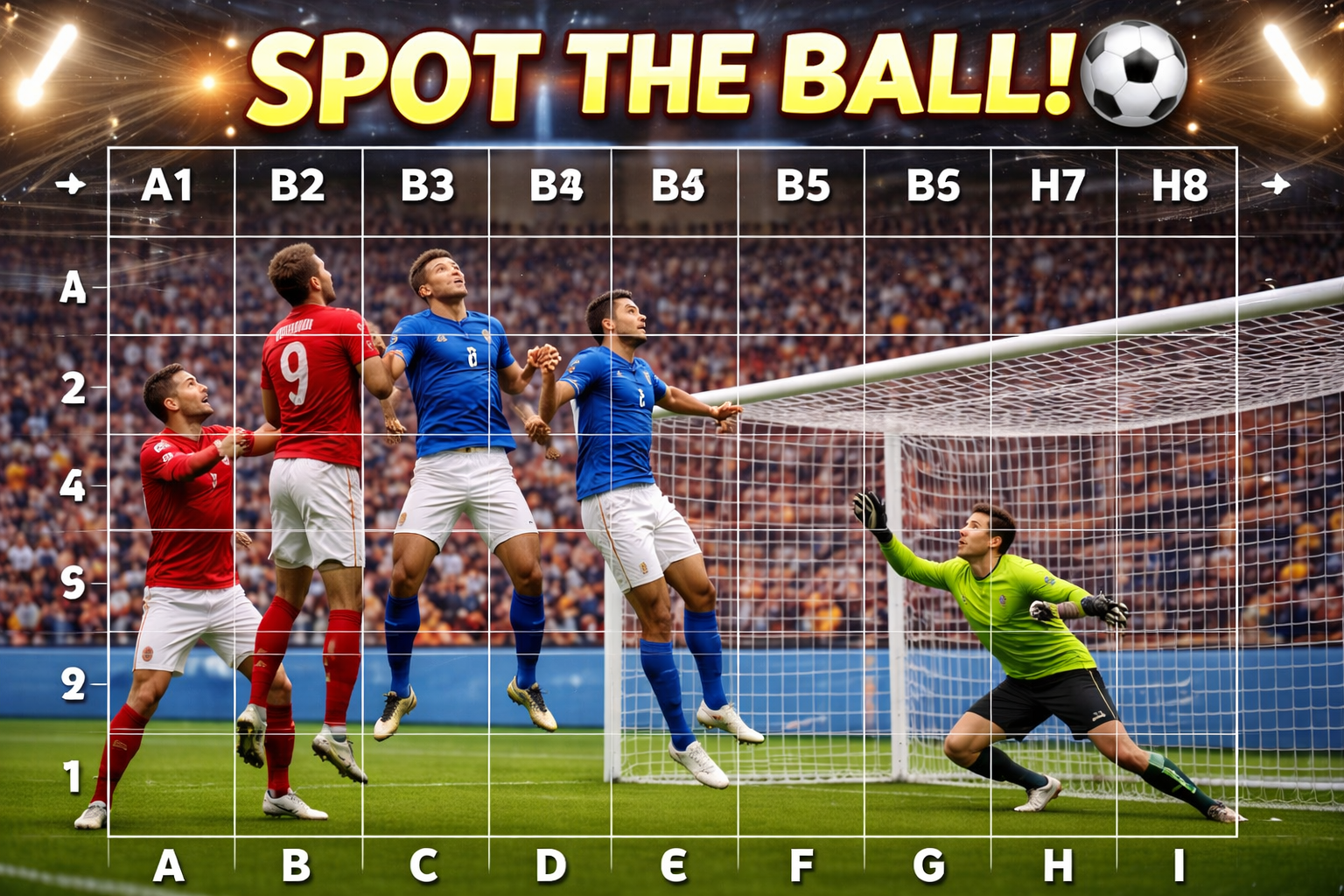
What Is Projectile Motion and Why Does It Matter?
When a ball is struck and becomes airborne, it immediately becomes a projectile — an object subject to two simultaneous forces: the initial velocity from the strike, and gravity pulling it downward at 9.8 metres per second squared. These two forces combined produce the signature curved arc you see in every cricket lofted shot, every football cross, and every volleyball spike.
This arc is not random. It is described by a set of equations that engineers and physicists have used for centuries. The key variables are:
- Initial velocity (v₀): How hard the ball was struck
- Launch angle (θ): The angle at which it left the contact point
- Air resistance (drag): Wind, ball surface, and spin all affect this
- Gravity (g): Constant at 9.8 m/s², always pulling downward
The resulting path follows a parabolic curve — symmetrical in a vacuum, slightly asymmetrical in real air conditions. Understanding this shape is your single biggest weapon in Spot the Ball.
The Magnus Effect: Why Spin Changes Everything
A spinning ball does not follow a pure parabola. This is because of the Magnus Effect — the phenomenon where a rotating object moving through air creates an unequal pressure distribution around it.
When a cricket ball spins clockwise (as viewed from behind), the airflow on the top surface moves with the rotation, creating lower pressure. The airflow on the bottom moves against it, creating higher pressure. The ball is pushed from high pressure to low — meaning it curves in the direction of the spin.
In practical Spot the Ball terms:
- A topspin football dips faster than expected. If a midfielder has hit a shot with topspin, the ball is lower in the frame than a pure parabolic path would suggest.
- A backspin cricket ball stays flatter and hangs in the air longer. If a batsman has played a cut shot with backspin, the ball position will be higher than intuition suggests.
- A swinging delivery curves laterally. You need to factor in the bowler’s wrist position to judge the horizontal displacement.
When studying a WinPlay image, ask yourself: which direction was the player’s body rotating at the moment of contact? That tells you the spin direction, which tells you the Magnus correction.
Reading Launch Angles from Player Geometry
Even without seeing the ball, you can estimate its launch angle from the player’s body position at the moment the photograph was taken. Sports biomechanics researchers have mapped the relationship between body posture and launch angle across multiple sports:
In football: A player’s knee angle at the moment of contact is a direct proxy for launch angle. A knee bent at roughly 90° at impact tends to produce shots between 15° and 25°. A straighter leg produces lower, harder shots. A player leaning back produces lofted balls above 30°.
In cricket: The position of the batsman’s elbow at the top of the swing determines trajectory. A high elbow at point of contact — as seen in the classic cover drive — sends the ball along the ground or on a low arc. A collapsing elbow produces a mistimed shot that skies steeply. Look at the leading elbow in the image.
In volleyball: The angle of the attacking arm at ball contact maps closely to the spike direction. A vertical arm produces a steep downward angle; a more horizontal arm produces a flatter trajectory.
The Role of Gravity Timing: How Long Has the Ball Been in the Air?
Here is a technique advanced WinPlay players use: estimate how long the ball has been airborne at the moment the photograph was taken. A ball in early flight is still close to the contact zone. A ball caught mid-arc is near the apex. A ball in descent is below the apex.
You can estimate flight stage by looking at:
- Where the fielders/defenders are looking. Players track the ball with their eyes and head. If all defenders are looking at the same upward angle, the ball is at or near its apex.
- The reaction posture of nearby players. Players bracing for a landing are a signal the ball is in descent.
- The shadow position. In daylight images, a ball’s shadow appears directly below it on the ground. If you can see a shadow (or estimate where it would fall from adjacent shadows), you have a ground-truth vertical reference.
Putting It All Together: The WinPlay Trajectory Method
Before placing your coordinate marker, run through this mental checklist:
- Identify the contact point. Where did the player last touch the ball? This anchors your trajectory calculation.
- Estimate launch angle from the player’s body geometry.
- Assess spin from wrist and arm rotation direction at contact.
- Apply Magnus correction — topspin drops it, backspin holds it, sidespin curves it laterally.
- Gauge flight stage from surrounding player reactions and eye-lines.
- Place your marker at the position the trajectory calculation points to — not where it feels like it should be.
The players who consistently score Bullseye (0–2 pixel distance) on WinPlay are not luckier than other players. They are more systematic. They treat each image as a physics problem with a single correct answer — because that is exactly what it is.
Why This Matters More Than Intuition
Human spatial intuition is notoriously unreliable in two-dimensional image analysis. We are wired to make fast pattern-matching guesses. But fast guesses in Spot the Ball consistently cluster around the most visually prominent player — not the actual ball position. Research in sports cognition shows that untrained observers place markers up to 35% further from the true ball centre than trained observers who use systematic analysis.
The physics approach moves you from the untrained cluster to the trained minority. And in WinPlay, that minority wins.
Ready to apply these principles? Head to our Competitions page and analyse today’s challenge with fresh eyes. The ball is somewhere in that image — and now you have the tools to find it.
Tags: Sports Science · Ball Physics · Trajectory Analysis · Spot the Ball Strategy · Magnus Effect · Cricket · Football