
The IPL Effect: How Watching One Cricket Match a Week Quietly Sharpens Your Spot the Ball Skills
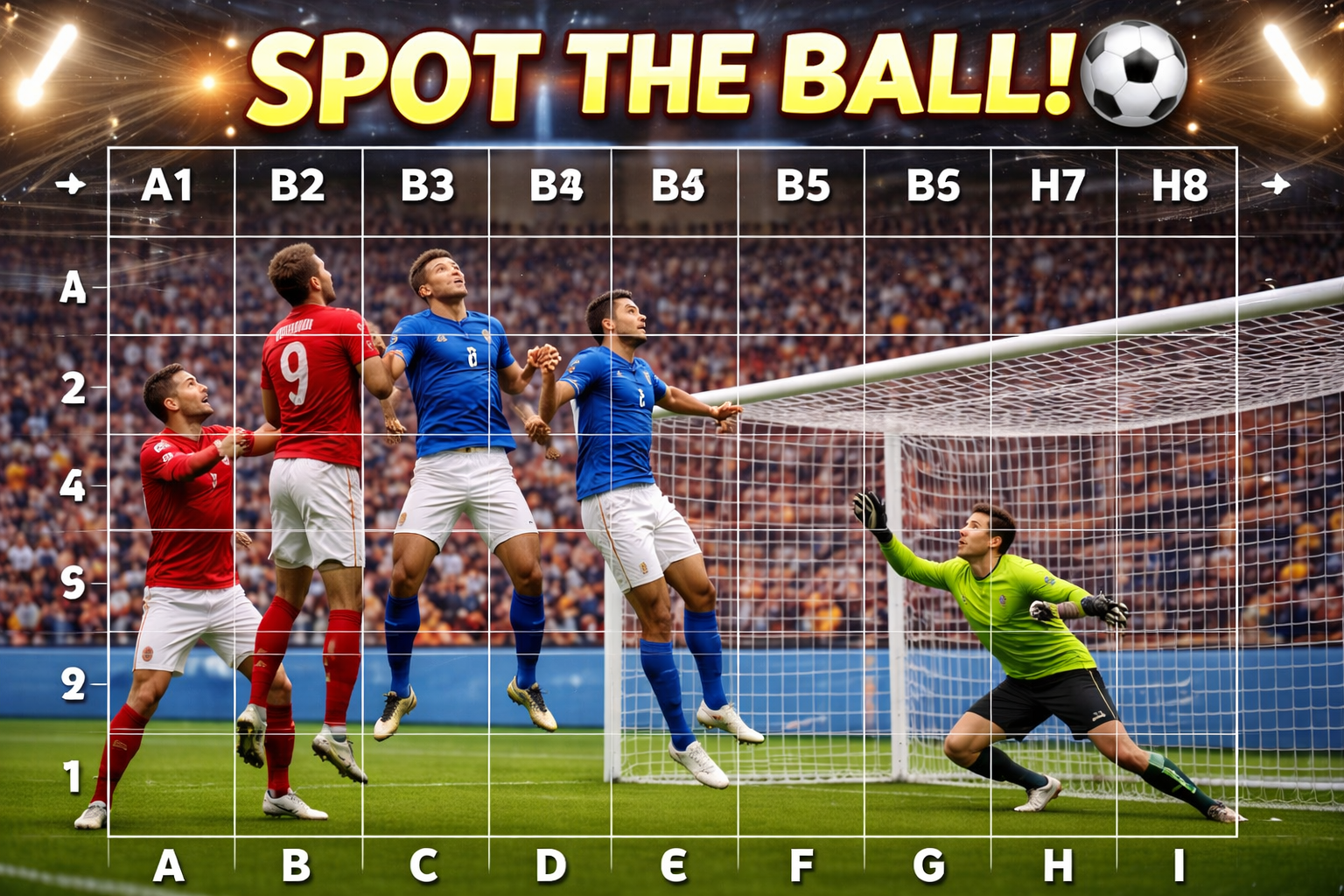
There is a strange truth about Spot the Ball that nobody talks about. Most of the players who consistently win competitions do not spend hours studying physics textbooks or watching tutorial videos. They spend their evenings watching cricket. And in India in 2026, that means most of them are watching the IPL.
Sounds too simple to be true. But the science of how visual perception develops in the brain says otherwise — and explains exactly why a casual cricket fan can beat a serious gamer on a Spot the Ball image without consciously trying.
This blog explains the connection. Once you understand it, you will start watching cricket differently — and your scores on WinPlay will quietly start climbing.
What Your Brain Is Actually Doing When You Watch a Match
For most people, watching a cricket match feels passive. You are sitting on the couch with a snack, eyes pointed at the screen, mostly tracking the score and shouting at the bowler. Mentally, it feels like nothing strenuous is happening.
In reality, your brain is performing one of the most computationally intensive tasks the human visual system is capable of. Every single delivery, your brain is processing dozens of variables simultaneously — the bowler’s arm angle at release, the seam orientation of the ball, the speed of approach, the batsman’s footwork, the trajectory of the delivery through the air, the deviation off the pitch, the timing of the bat swing, the angle of contact, and the direction the ball travels afterwards. All of this happens in roughly four seconds per delivery, ball after ball, for hours.
This is not abstract knowledge. This is your visual system being trained on ball physics, player biomechanics, and trajectory prediction in real time, with feedback every few seconds. The commentator confirms what just happened — “great cover drive, beautiful timing” — and your brain locks the visual pattern to the verbal description. Over hundreds of hours of watching matches in your lifetime, you have built an extraordinary internal database of how a cricket ball moves under different conditions.
You just never consciously think about it. Which is exactly why it works.
The Cricket Fan’s Hidden Advantage on WinPlay
When a cricket fan opens a Spot the Ball image on WinPlay, something interesting happens in the first half-second. Before they have consciously analysed anything, their visual system has already narrowed the probable ball location to a relatively small area of the frame. They might not be able to explain why, but the placement they make is dramatically better than someone with no cricket-watching background.
What is actually happening is pattern recognition firing. The image they are looking at — a batsman mid-swing, a bowler in delivery stride, a fielder reacting — matches thousands of stored patterns from their years of watching matches. Their brain knows what the next frame of that action should look like. The ball position is essentially predicted before conscious analysis even begins.
This is the same neurological mechanism that allows wicket-keepers to react to a ball travelling at 140 kilometres per hour. It is not faster reflexes — it is faster prediction. The wicket-keeper has watched the bowler’s wrist position thousands of times and his brain knows where the ball is going before it has actually arrived.
You have the same wiring, built up from your years of watching. Spot the Ball just gives you a way to use it for prizes.
Why IPL Specifically Trains You Better Than Test Cricket
This is where it gets interesting. Not all cricket viewing trains your brain equally for Spot the Ball. The IPL format is unusually well-suited for the kind of pattern recognition the game tests.
A Test match contains a lot of dead time between deliveries — defensive forward presses, leaves outside off stump, slow accumulation of runs. The action density is lower, and the variety of shot types is narrower. T20 cricket and IPL specifically forces batsmen to play every shot in the book within the same innings — cover drives, lofted shots, reverse sweeps, scoops, pull shots, slogs, late cuts. Your brain is exposed to a full catalogue of shot mechanics in a compressed window.
Bowlers in IPL also use more variation. A single over might contain a slower ball, a yorker, a bouncer, and a length ball. Each of these has a completely different trajectory profile that your brain learns to recognise from the bowler’s body geometry at release.
The result is that ninety minutes of IPL viewing trains your Spot the Ball pattern recognition harder than three hours of Test cricket. It is denser, more varied, and more visually instructive.
The Other Sports That Are Quietly Helping You
This same principle extends to other sports, with different specific benefits. Football viewing, particularly Premier League and Champions League matches, trains your brain on long-range trajectory prediction — corners, free kicks, lofted passes, and shots from distance. Football fans tend to be especially strong at Spot the Ball challenges where the ball is high in the frame because their brains are constantly tracking aerial ball flight.
Volleyball is even more direct. The angles, the spike biomechanics, and the predictable arc make volleyball one of the easiest sports to read in still images — but only if you have actually watched volleyball played live or on television. Fans of the Indian Pro Volleyball League have a measurable advantage on WinPlay’s volleyball challenges.
Badminton is the trickiest because the shuttlecock behaves so differently from any ball — high drag, rapid deceleration, near-vertical descent in the late phase of flight. Watching badminton trains a very specific intuition that does not transfer well from other sports. If you want to win WinPlay badminton challenges, you need to watch badminton specifically.
The point is this — every sport you watch is quietly contributing to your Spot the Ball skill in ways you do not consciously notice. The broader your sports viewing diet, the broader your unconscious pattern recognition becomes.
How to Watch Differently and Get Better Faster
If you want to use this knowledge actively rather than passively, there are small changes you can make to your match-watching routine that compound quickly into measurable WinPlay improvement.
The first is to pause matches occasionally just before contact. Most modern streaming services let you pause and rewind. The next time you are watching IPL and a batsman is about to play a shot, hit pause one second before bat meets ball. Try to predict where the ball will be one second after contact. Then unpause and watch what actually happens. Do this five times during a match, and you have just performed five focused Spot the Ball training exercises. Your prediction will be wildly off at first and rapidly improve.
The second is to watch the players who are not directly involved in the action. Most viewers watch the batsman or bowler. The trained Spot the Ball player watches the fielders. Where are the slips looking? Where is mid-off positioning himself? What is the bowler doing after release? The off-screen players give you the same information that triangulation gives you on a still image — they are reacting to the actual ball position, and reading them trains you for the WinPlay analysis you will do later.
The third is to watch slow-motion replays consciously. Most people watch replays passively to enjoy the moment again. The trained Spot the Ball player watches replays as data — studying the wrist position at release, the body angle at contact, the trajectory shape. Twenty seconds of focused slow-motion study is worth ten minutes of normal viewing for skill development.
The Practical Takeaway for Your Next WinPlay Session
If you have been struggling to break into the Bullseye or Expert tier on WinPlay, the answer might not be more game theory. It might be more cricket. Or more football. Or more volleyball.
Watch a full IPL match this week with your phone away. Try the pause-and-predict exercise five times during the match. Watch the slow-motion replays as data, not entertainment. Then play tomorrow’s Spot the Ball challenge and see what happens to your accuracy.
You will probably surprise yourself. Not because you suddenly learned a new technique, but because the technique was always there — built quietly into your brain over years of watching the sports you love. WinPlay just gives you a way to turn that hidden skill into something you can win prizes with.
The ball was always there. Your eye has been training for it longer than you realised.
Ready to put your sports knowledge to the test? Today’s WinPlay Spot the Ball challenge is live — open the app and place your marker. The prize is real, the win is yours, and your years of watching cricket are about to pay off in the most unexpected way.